Inside AI Recommendation Systems Shaping Game Choices on Licensed British Mobile Platforms
Mia Lange · Aug 19, 2026

Inside AI Recommendation Systems Shaping Game Choices on Licensed British Mobile Platforms
Artificial intelligence systems now drive the majority of game recommendations seen by British players using licensed mobile platforms, relying on layers of machine learning models that process behavioral signals in real time. These engines collect data points such as session duration, preferred game categories, deposit patterns, adn interaction speed, then feed them into algorithms that adjust suggestions within seconds of each action. Collaborative filtering techniques compare one player's history against anonymized profiles of similar users, while content-based methods analyze attributes like volatility levels, theme elements, and bonus structures to match individual preferences.
Core Components of Personalization Engines
Developers integrate several distinct model types into single platforms, combining matrix factorization for user-item predictions with neural networks that handle sequential data such as swipe patterns and time-of-day activity. Reinforcement learning components test different suggestion sequences against live engagement metrics, updating reward functions whenever a player completes a spin or extends a session. Data pipelines normalize inputs from iOS and Android devices alike, ensuring that regional preferences among British users, including affinity for certain live dealer formats or progressive jackpot titles, receive appropriate weighting without violating platform-specific rules.
Feature engineering plays a central role, transforming raw telemetry into usable vectors that capture elements like average bet size relative to account balance and frequency of game switches. Natural language processing layers sometimes scan in-app chat or review text to detect sentiment shifts, although most systems prioritize numeric signals over unstructured text. Observers note that model accuracy improves when training datasets include several months of historical play across thousands of accounts, allowing the engine to identify seasonal trends such as increased interest in certain themes during major sporting events.
Data Handling and Model Training Practices
Training occurs on secure cloud infrastructure where differential privacy techniques add noise to individual records before aggregation. This approach protects player identities while preserving statistical patterns that drive accurate predictions. Regular retraining cycles, often scheduled weekly or bi-weekly, incorporate fresh interaction logs so that sudden changes in player behavior receive prompt reflection in updated recommendation lists. External validation from independent auditors confirms that these processes align with broader data protection standards enforced across European jurisdictions.
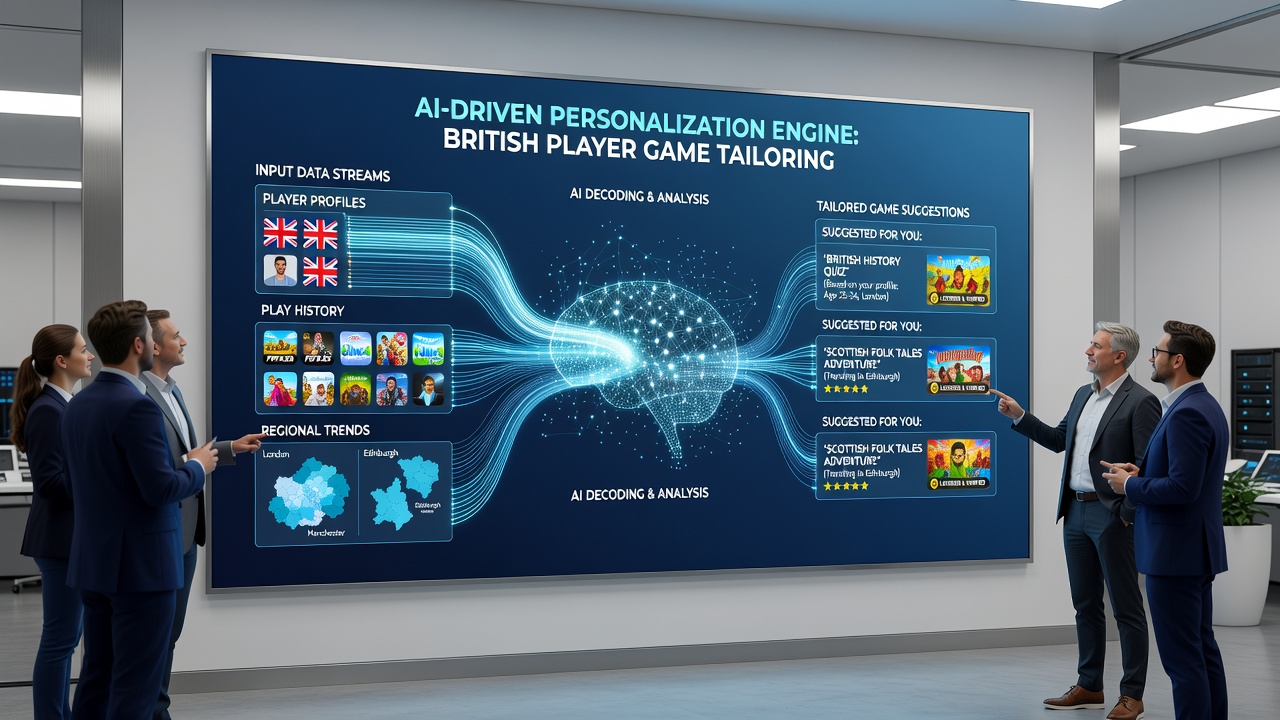
One documented case involved a mid-sized operator that introduced a hybrid model blending gradient-boosted trees with recurrent neural networks, resulting in a measurable lift in session completion rates according to internal benchmarks shared at industry conferences. Researchers from institutions outside the UK, including studies published through North American academic channels, have examined similar architectures and reported that ensemble methods tend to outperform single-model approaches when datasets contain high-dimensional player features.
August 2026 Developments in Algorithm Deployment
Reports circulated in August 2026 indicated that several platforms began testing transformer-based architectures originally developed for language modeling but adapted for sequential gaming events. These newer systems process longer context windows of player actions, enabling suggestions that account for multi-day behavior rather than isolated sessions. Industry associations based in Australia and Canada have published comparative analyses of such implementations, highlighting differences in computational cost versus precision gains when models run on edge devices versus centralized servers.
Integration with device-level sensors adds another dimension, allowing engines to factor in battery status or network type when prioritizing lighter games over resource-intensive titles. British players on licensed apps therefore encounter suggestions that adapt not only to taste but also to the practical constraints of mobile usage throughout the day.
Evaluation Metrics and Continuous Improvement
Platforms track metrics including click-through rates on suggested games, subsequent play duration, and retention over thirty-day windows to evaluate model performance. A/B testing frameworks run dozens of variants simultaneously, directing small user cohorts toward different suggestion logics before scaling successful variants across the full audience. Academic papers from European research groups have outlined best practices for avoiding feedback loops where popular titles dominate recommendations at the expense of discovery for niche categories.
Cross-border comparisons reveal that operators serving multiple regulated markets adjust weighting factors to reflect local preferences, with British cohorts showing distinct patterns around live casino interaction compared with players in other regions. Government agencies in Canada and the United States have released guidelines on transparent algorithmic decision-making that some platforms reference when documenting their personalization logic for compliance documentation.
Conclusion
AI-driven personalization engines continue to evolve through iterative refinement of data pipelines, model ensembles, and evaluation protocols that respond to both technical advances and shifting player behaviors on licensed British mobile platforms. The combination of established techniques such as collaborative filtering with emerging transformer architectures points toward increasingly granular suggestion systems that operate within established regulatory boundaries across multiple jurisdictions.